WholeMovement strives to connect with and offer resources to the movement and somatic communities and beyond. The LBMS work is far-reaching, and both informs and is informed by every facet of our lived experiences.

Community resources
If you or your organization would like to connect with us or be a part of our community of offerings, please do not hesitate to contact us.
LIMS – Laban/Bartenieff Institute for Movement Studies http://labaninstitute.org
EMOVE Institute – situated in the Netherlands and works with internationally recognized experts in the fields of movement analysis and somatic practices. http://emoveinstitute.com
Choronde Progetto Educativo – this Rome-based association in Italy is a center for the artistic pedagogy of movement in schools and in society. https://www.chorondeprogettoeducativo.it/it/laban-bartenieff/
Pantarhei Studio – situated in Israel, this studio hosts a range of movement and therapeutic work https://pantarhei-studio.co.il/lbmsprogramen/
ISMETA – International Somatic Movement Education and Therapy Association http://ismeta.org
Laban Guild International – https://labanguildinternational.org.uk/
LBMS Milano – https://www.formazionelbms.it/en/lbms-training/

WM Featured resources
In addition to the Blog posts that explore a variety of concepts and applications of somatic practice, movement analysis, the Laban/Bartenieff Movement System, here we present some significant resources from WholeMovement members. With the exception of the book Everybody is A Body, all are free to access.
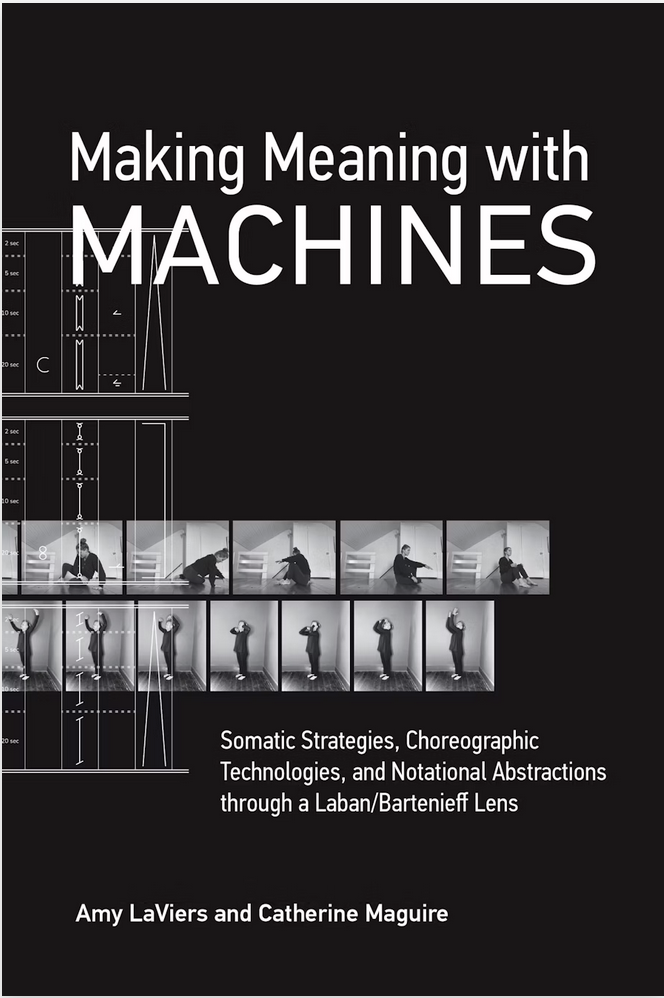
A rigorous primer in movement studies for designers, engineers, and scientists that draws on the fields of dance and robotics.
How should a gestural interface react to a “flick” versus a “dab”? Versus a “punch”? Should robots reach out to a human counterpart with a direct, telescoping action or through a circuitous arc in space? Just as different movements express the different internal states of human movers, so too can the engineered systems behind robots.
In Making Meaning with Machines (MIT Press, 2023), Amy LaViers and Catherine Maguire offer a refreshingly embodied approach to machine design that supports the growing need to make meaning with machines by using the field of movement studies, including choreography, somatics, and notation, to engage in the process of designing expressive robots.
Drawing upon the Laban/Bartenieff tradition, LaViers and Maguire sharpen the movement analysis methodology, expanding the material through their work with machines and putting forward new conventions, such as capitalization, naming, and notation schemes, that make the embodied work more legible for academic contexts.
The book includes an overview of movement studies, exercises that define the presented taxonomy and principles of movement, case studies in movement analysis of both humans and robots, and state-of-the-art research at the intersection of robotics and dance.
Making Meaning with Machines is a much-needed primer for observing, describing, and creating a wide array of movement patterns, which ultimately can help facilitate broader and better design choices for roboticists, technologists, and designers.
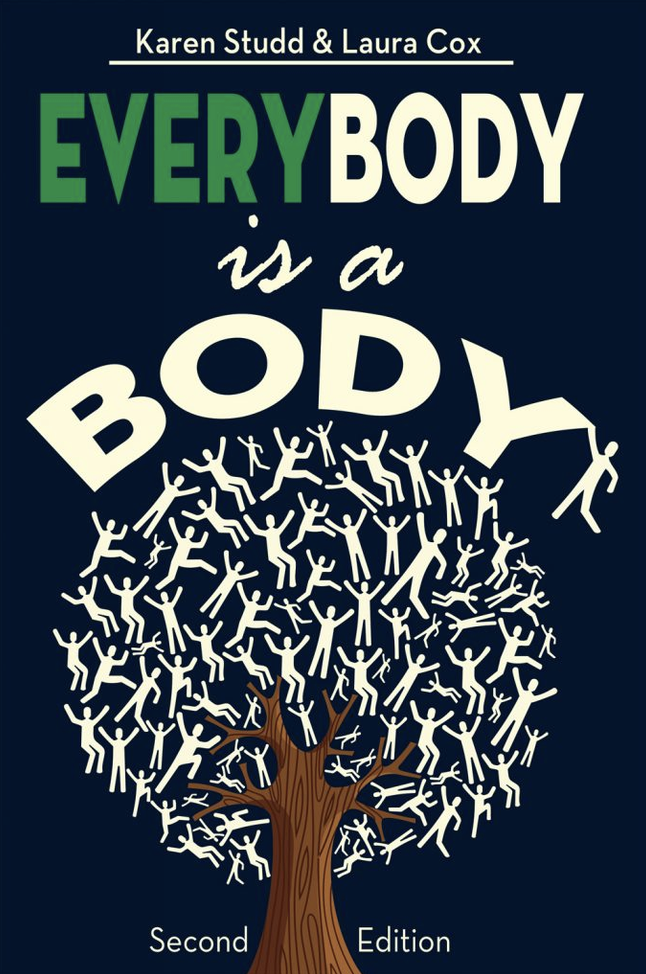
This ground-breaking book is written for Everybody, but is also the most comprehensive textbook outlining the Laban/Bartenieff Movement System (LBMS). Movement connects us all. We are all moving, all of the time. The moving body is the foundation of human activity. In a world where technological advancement allows for instant global connections, we are becoming increasingly disembodied. This gives rise to “dis-ease” in our physical, emotional and intellectual selves. This book promotes increased awareness of the power and potential of human movement. It takes into account personal uniqueness, as well as the universal aspects of what it means to be human. This book is for every body. In order to experience life to its fullest, it is important to keep in touch with our moving selves. It is not a “how-to” book. We are not advocating a specific movement technique or practice. It is about re-discovering that you are a mover and that movement is not just an activity. Our movement is the expression of ourselves in the world.
This second edition includes expanded chapters and appendices further explicating the Laban/Bartenieff Movement System (LBMS) for the benefit of students in movement analysis training programs. The text’s additions also serve as a testimony to the ongoing development of this system.
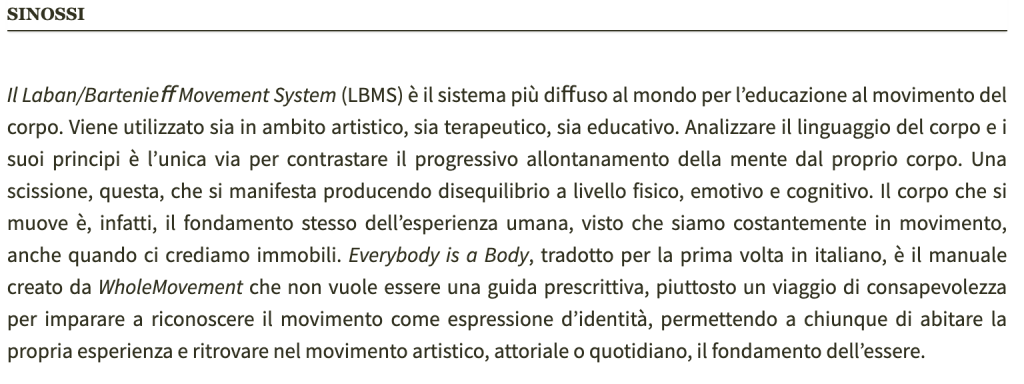
In July 2026, the Italian Italian Translation and Publication of Everybody is a Body was published by Dino Audino, translated by: Caterina Mocciola.

Free online classes in somatic movement practice through the Laban/Bartenieff Movement System. Alexandra Baybutt shares her DIY films shot at home during the pandemic lockdowns. For your own personal practice.
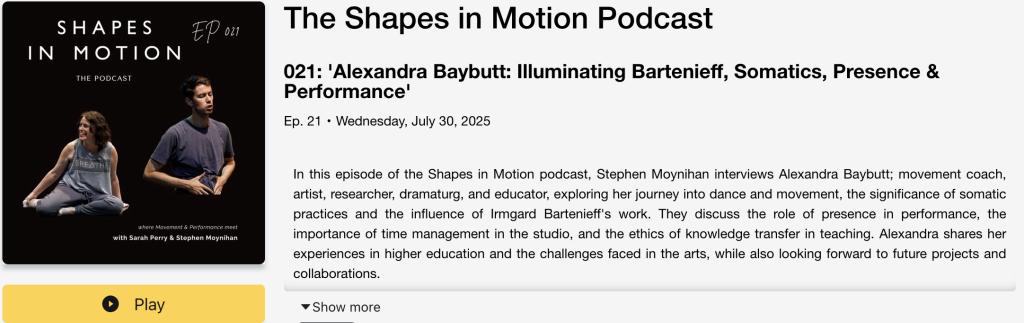
In this episode of the Shapes in Motion podcast, Stephen Moynihan interviews Alexandra Baybutt; movement coach, artist, researcher, dramaturg, and educator, exploring her journey into dance and movement, the significance of somatic practices and the influence of Irmgard Bartenieff’s work. They discuss the role of presence in performance, the importance of time management in the studio, and the ethics of knowledge transfer in teaching. Alexandra shares her experiences in higher education and the challenges faced in the arts, while also looking forward to future projects and collaborations. Listen here.